
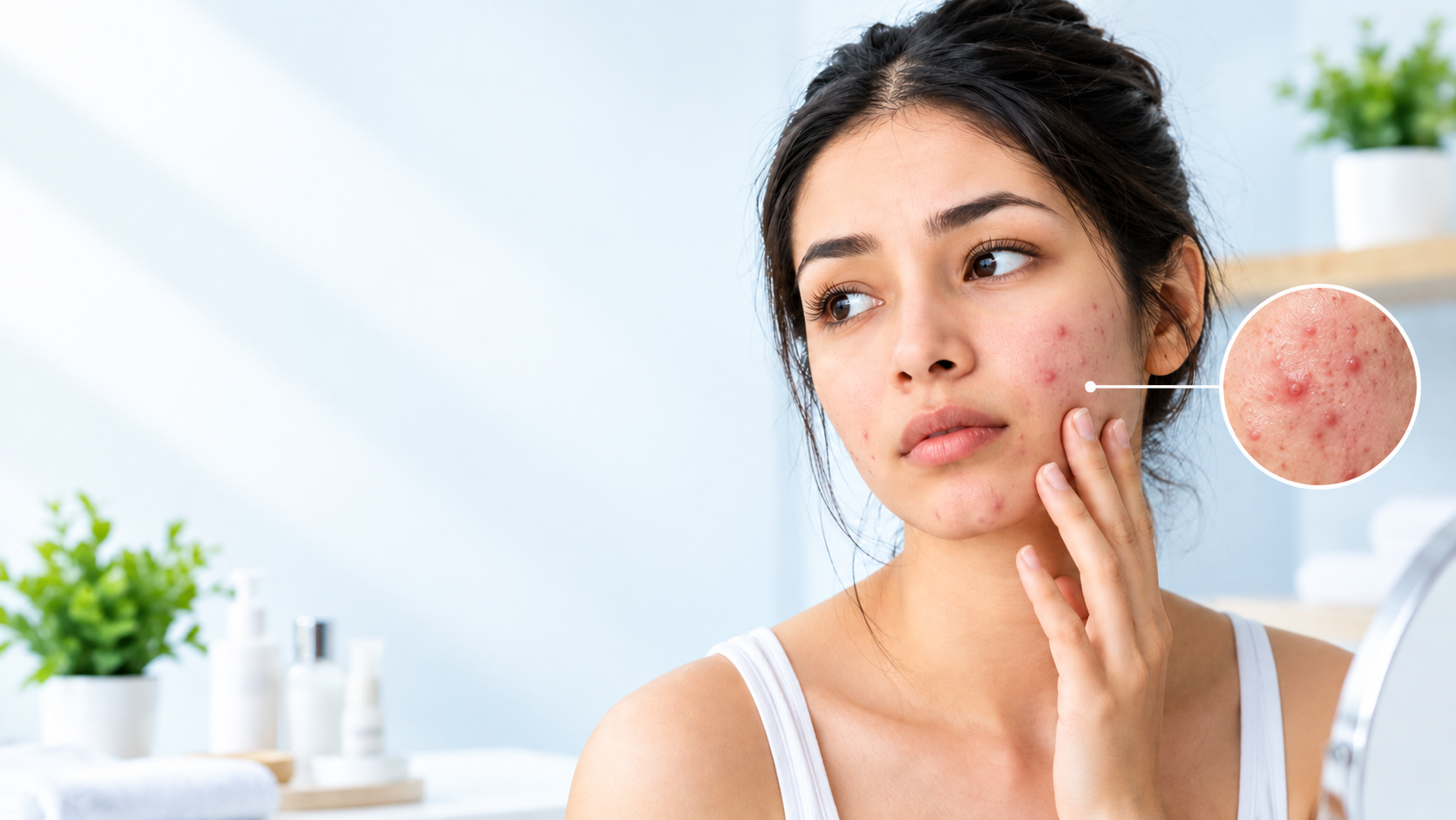
Acne is one of the most common skin conditions worldwide, yet it remains one of the most misunderstood. If you’ve ever felt that your breakouts appear at the worst possible time — or that they simply won’t go away no matter what you try — you’re not alone. Many people mistakenly believe acne is caused by “dirty skin” or poor hygiene, but the truth is far more complex.
Acne is a medical condition, not a personal failure. Understanding the biological “why” behind your breakouts is the first step toward clear, healthy skin. This guide covers the underlying causes of acne, the different types you might be facing, and why professional care — like the treatment plans we build at Tender Skin International in Mumbai, Pune, and Dubai — is the key to breaking the cycle of recurrence.
1. What Causes Acne? The Science Behind the Breakouts
Acne is a disorder of the pilosebaceous unit — the hair follicle and its attached oil (sebaceous) gland. When this unit becomes clogged or inflamed, a breakout occurs.
The Biological Foundations
Acne formation typically involves four factors working together:
- Excess sebum production. Your sebaceous glands produce oil (sebum) to keep skin hydrated. When hormone levels fluctuate, these glands can overproduce oil.
- Dead skin cell buildup. Normally, dead skin cells shed and move to the surface. Sometimes they stick together inside the pore, creating a plug.
- Bacteria (Cutibacterium acnes). This bacteria lives naturally on everyone’s skin. Trapped inside an oily, clogged pore, it multiplies and drives inflammation.
- Inflammation. Your immune system reacts to the bacteria, causing the redness, swelling, and pus associated with breakouts.
Key Triggers
The biological mechanism is consistent, but triggers vary from person to person:
- Hormonal fluctuations. Androgens can significantly increase oil production — this is why acne is common during puberty, menstruation, and periods of high stress.
- Lifestyle and diet. High-glycemic foods and dairy can trigger inflammatory responses in some individuals. Sleep deprivation and chronic stress elevate cortisol, which spikes oil production.
- External factors. Comedogenic (pore-clogging) makeup, heavy moisturizers, friction from masks, and environmental pollution can all worsen existing acne.
2. Different Types of Acne — and Why Each Needs a Different Treatment
One of the biggest mistakes in skincare is treating all acne the same way. Because acne shows up in different forms, effective treatment starts with knowing exactly which type you’re dealing with.
Non-Inflammatory Acne
Whiteheads and blackheads (comedones) occur when pores are clogged with oil and skin cells, with little to no active bacterial infection — they’re generally not red or swollen. These respond well to topical exfoliants like salicylic acid, which help clear the pore lining and prevent further buildup. Our Salicylic Peel is designed specifically for this.
Inflammatory Acne
Papules and pustules are small, tender red bumps or white-centered lesions. Nodules and cysts are deeper, painful lesions beneath the skin’s surface — a more severe form of acne with a higher risk of permanent scarring.
Inflammatory acne is resistant to mild over-the-counter products. It needs clinical-grade care: our Black Peel targets active bacteria and inflammation, Blue Light Facial phototherapy calms acne-causing bacteria without downtime, and our Laser Acne Reduction Facials combat inflammatory acne and hyperpigmentation while promoting healing.
Dealing with active breakouts right now? Don’t wait for it to get worse — book a one-on-one evaluation with our dermatology team in Mumbai, Pune, or Dubai.
3. The Cycle of Recurrence: Why Does Acne Keep Coming Back?
If you’ve cleared your skin only to see breakouts return weeks later, you’ve experienced the “acne cycle.” Acne is often a chronic, relapsing condition — and recurrence usually comes down to three things:
- Stopping treatment too early. Many people stop as soon as their skin clears. Acne treatment is about maintenance; stopping early lets the underlying triggers reassert themselves.
- Unaddressed hormones. If hormonal imbalance is the primary driver, topical creams alone will never provide a lasting fix.
- Recurring lifestyle habits. Diet, stress, and skincare-product triggers can reset the inflammation cycle.
At Tender Skin International, we don’t just treat the breakout you have today — we analyze your skin’s cycle to prevent the breakouts of tomorrow, with periodic monitoring and a plan that adjusts as your skin improves.
4. Beyond the Breakout: Understanding the Long-Term Impact
Acne carries a real emotional toll alongside the physical one. When inflammation is severe or deep, it damages the dermis. As skin heals, it can produce too much collagen (raised scars), too little (indented scars), or leave behind post-inflammatory hyperpigmentation (dark spots).
Can Acne Scars Be Removed Completely?
It’s important to set the right expectations: true structural scarring is permanent, but it isn’t hopeless.
- Hyperpigmentation vs. scars. Dark spots fade over time and with active ingredients like Vitamin C, or with professional brightening treatments.
- Indented scars. These need structural remodeling. Advanced technology — including our CO2 Fractional Laser Scar Resurfacing, Authentic Derma Pen microneedling, and scar subcision — can significantly improve texture and appearance, making scars nearly invisible even if not 100% erased.
The key takeaway: early intervention is the best prevention. The longer active, inflammatory acne goes untreated, the higher the likelihood of permanent scarring.
5. Why Choose Tender Skin International
Acne treatment isn’t just about the products or procedures used — it’s about who is behind them. Tender Skin International has spent over 20 years treating skin and hair concerns for more than 200,000 patients across our clinics in Mumbai, Pune, and Dubai.
- Experienced doctors. Our team is led by Dr. Sonia Tekchandani, co-founder of TSI, with over 25 years of clinical and teaching experience in medical aesthetics.
- Diagnosis before treatment. Every acne case starts with a one-on-one evaluation and bloodwork to check hormone levels — not a generic protocol.
- Clinical-grade technology. From salicylic and Black Peels to CO2 fractional laser resurfacing and scar subcision, treatments are matched to your specific acne type and severity.
- A long-term plan, not a single visit. We monitor your skin’s cycle over time and adjust treatment as it improves, to reduce the chance of recurrence.
6. Meet Your Acne Specialists
Dr. Sonia Tekchandani — Dermatologist, Co-Founder. Dr. Sonia Tekchandani is a renowned dermatologist and co-founder of Tender Skin International, India & UAE. With over 25 years of clinical and teaching experience, she is an award-winning celebrity dermatologist known for her injector skills and eye for facial aesthetics, trusted by 200,000+ patients.
Dr. Shikha Shah — Dermatologist & Cosmetologist. Dr. Shikha Shah has been with Tender Skin International for over two and a half years, building treatment plans around close listening to each patient’s specific concerns.
7. Your Path to Clear Skin: Expert Solutions
Every skin journey is unique. Rather than relying on generic store-bought solutions, we take a customized, clinical approach. Whether you’re struggling with stubborn cystic acne or managing the aftermath of past breakouts, our Acne and Acne Scar Treatments are designed to:
- Reduce active inflammation through medical-grade facials and targeted peels.
- Promote skin remodeling using advanced technology to fade scars and smooth texture.
- Provide long-term support with a skincare routine that prevents future recurrence.
You don’t have to battle your skin alone. Let our experts provide the diagnosis and personalized care you deserve.
Book a Consultation at Tender Skin International Today →
8. Frequently Asked Questions
Can stress really cause acne?
Yes. Stress triggers the release of cortisol, a hormone that stimulates oil glands. Higher oil production creates a more favorable environment for bacteria to multiply, leading to breakouts.
Why does my acne get worse before it gets better?
This is often called “skin purging.” When you start using effective treatments, your skin’s cell turnover speeds up, bringing underlying congestion to the surface faster than usual. This is typically temporary.
Are home remedies effective for acne scars?
Generally, no. Many home remedies are irritating or comedogenic, which can worsen inflammation. Professional treatments are safer, more precise, and far more effective at targeting the depth of a scar.
How often should I get professional acne treatment?
This depends on the severity of your acne and your treatment plan. Most of our clients start with a bi-weekly or monthly schedule to gain control, then move to a maintenance schedule to keep their skin clear.
For questions about side effects, safety, or how long results last, see the FAQ on our Acne and Acne Scar Treatments page.