
The desire to reverse hair loss naturally — without relying on pills or invasive procedures — is a deeply human response. When you notice your hair thinning, your first instinct is often to look in your pantry, your spice cabinet, or the shelves of your local organic health store. It’s a natural first step in the journey, driven by the hope that the solution to a complex medical issue might be as simple as a better diet or a well-placed essential oil.
But can hair grow back naturally? The truth is more nuanced than the advice you find on social media. While lifestyle, nutrition, and holistic care are the absolute foundation of hair health, “natural” growth has biological limits. When you’re dealing with genetic, hormonal, or structural factors, those methods often fall short of the results you desire.
In this guide, we’ll explore the early warning signs of thinning, the biological reasons your hair is falling out, the distinct difference between “supportive” and “restorative” hair care, and the exact moment when clinical intervention — the kind our specialists provide in Mumbai, Pune, and Dubai — becomes the only logical path to recovery.
The Early Warning Signs You Should Never Ignore
Hair loss rarely announces itself with a sudden, total shedding. Instead, it’s a slow, deceptive process. For most people, significant hair loss begins long before the scalp becomes visible to the naked eye. Recognizing these “invisible” signs is the difference between simple maintenance and needing intensive restoration.
If you’re noticing any of the following, your hair follicles are likely telling you they need more than a daily supplement:
- Shedding beyond the threshold. While it’s normal to lose 50 to 100 hairs a day, notice if your brush or shower drain is consistently holding more than that.
- The “part line” creep. If your hair part looks wider than it did a year ago, this is a hallmark sign of diffuse thinning.
- Changes in texture. Hair that becomes suddenly brittle, dry, or finer in diameter is often a sign of follicle stress.
- Temple and crown thinning. For many, the “frame” of the face — the temples and the crown — is the first area to show signs of recession.
Recognizing these indicators early is your greatest advantage. The longer a follicle remains dormant or miniaturized, the more challenging it becomes to reawaken. Proactive care is the most effective prognosis for long-term retention.
Why Is My Hair Falling Out? The Biological Drivers
To treat hair loss, you must first stop treating it as a “cosmetic” problem. Hair loss is a physiological event, and you cannot address a biological driver with a smoothie alone.
1. Genetics (Androgenetic Alopecia)
This is the most common cause of thinning. It involves a hormone called DHT (dihydrotestosterone), which causes “follicle miniaturization.” Over time, the hair follicle shrinks, the hair it produces becomes thinner and shorter, and eventually, it stops producing hair entirely. No topical oil can block DHT at the receptor level.
2. Systemic Drivers
Your hair is a “non-essential” tissue. When your body is stressed, your follicles are the first to be deprived of nutrients. Issues like:
- Hormonal imbalances. PCOS (Polycystic Ovary Syndrome) and thyroid dysfunction are common culprits.
- Nutritional gaps. Low ferritin (iron stores), Vitamin B12, and Vitamin D levels can halt the growth cycle.
- Telogen Effluvium. A temporary but severe shedding phase triggered by major stress, surgery, or sudden illness.
Because these causes vary so wildly, context is everything. You cannot treat a hormonal imbalance with rosemary oil — you have to treat the source.
Can Hair Grow Back Naturally? The Reality Check
It’s time to be honest about what natural methods can and cannot do. We have to draw a clear distinction between supportive care and restorative care.
What Works (Supportive Care)
Nutrition, scalp stimulation through gentle massage, and stress reduction are excellent for creating a healthy environment for hair. If your hair loss is caused by temporary stress or mild nutrient deficiencies, addressing these factors can absolutely help your hair recover its natural luster and density. You’re, in effect, removing the obstacles preventing your hair from doing what it’s programmed to do.
What Doesn’t (Restorative Care)
DIY concoctions — such as onion juice, clove water, or certain essential oils — cannot reverse the structural changes of miniaturized follicles. A common myth is that if you “nourish” the follicle enough, it will suddenly start growing thick hair again.
The truth about follicle miniaturization is that once the follicle has closed off or shrunk past a certain point, it needs more than just topical stimulation to reopen the channel. The skin barrier is designed to keep things out, not to absorb them into the root of the follicle. Most shampoos and oils simply wash away before they can impact the biological processes occurring deep within your dermis.
Tried the natural route for months with no change? Book a one-on-one consultation with our hair specialists in Mumbai, Pune, or Dubai to find out what’s actually driving your thinning.
Best Hair Treatments: The Clinical Pathway
When “natural” methods fail, it’s not a sign of failure — it’s a sign that the root cause is more complex than your bathroom cabinet can handle. This is the moment to pivot to professional, evidence-based expertise.
At Tender Skin International, we believe professional diagnosis is the only prerequisite for hair success. You need to know if you’re fighting genetics, a hormonal imbalance, or a nutritional deficiency before you spend money on treatments.
Our Hair Treatments use evidence-based modalities that target the biological drivers of hair loss:
- Folli Rich PRP (Platelet-Rich Plasma). We use your body’s own regenerative potential — isolating growth factors from your blood and injecting them into the scalp to give the follicle the “fuel” it needs to return to an active growth phase.
- Micro Mesotherapy Scalp. Targeted delivery of essential nutrients, vitamins, and stimulants directly into the scalp, bypassing the skin’s barrier to ensure the follicle receives exactly what it needs.
- Exosome growth-factor therapy. Unlike topical oils, these clinically designed formulations prolong the hair growth phase (anagen) and minimize the resting phase (telogen).
Men and women require different hormonal strategies, and your hair density goals are unique. Customization isn’t a luxury — it’s a medical necessity.
Why Choose Tender Skin International
Restoring hair growth isn’t just about the products used — it’s about who is diagnosing the cause. Tender Skin International has spent over 20 years treating skin and hair concerns for more than 200,000 patients across our clinics in Mumbai, Pune, and Dubai, with 200+ specialized services under one roof.
- Experienced doctors. Our team is led by Dr. Sonia Tekchandani, co-founder of TSI, with over 25 years of clinical and teaching experience in medical aesthetics.
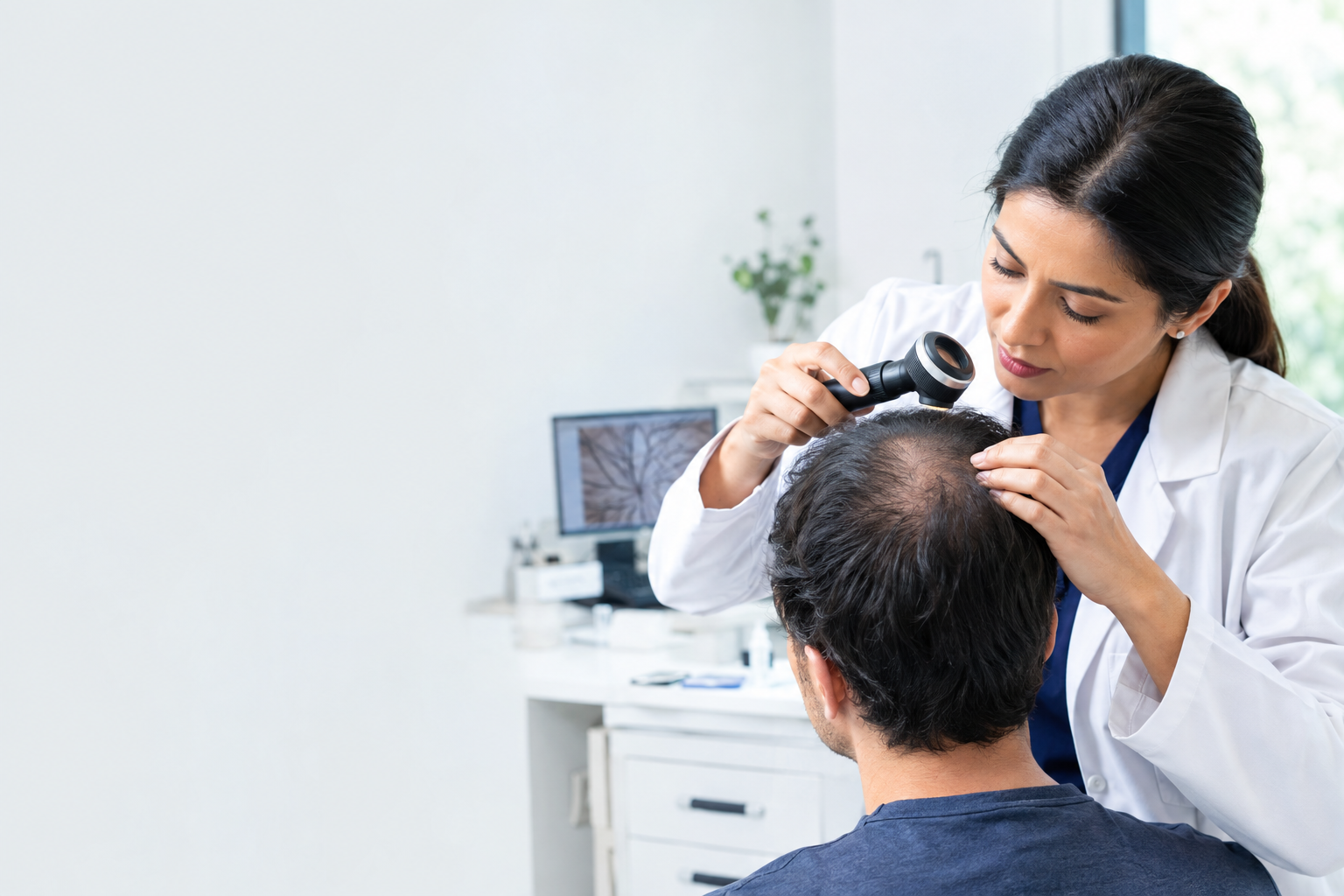
- Diagnosis before treatment. Every hair consultation starts by identifying whether you’re dealing with genetics, hormones, nutrition, or stress — before recommending a single treatment.
- Clinical-grade technology. From Folli Rich PRP to Micro Mesotherapy and Exosome therapy, treatments target the biological driver, not just the symptom.
- A structured recovery window. We set clear expectations on timelines, so you know what “working” actually looks like instead of guessing.
Meet Your Hair Specialists
Dr. Sonia Tekchandani — Dermatologist, Co-Founder. Dr. Sonia Tekchandani is a renowned dermatologist and co-founder of Tender Skin International, India & UAE. With over 25 years of clinical and teaching experience, she is an award-winning celebrity dermatologist trusted by 200,000+ patients for both skin and hair concerns.
Dr. Shikha Shah — Dermatologist & Cosmetologist. Dr. Shikha Shah has been with Tender Skin International for over two and a half years, designing treatment plans built around close listening to each patient’s specific concerns.
Conclusion
Natural care is the foundation of hair health — it builds the house, so to speak. But when the foundation begins to crumble due to genetics or hormonal shifts, you need a contractor, not a decorator.
Hair loss is a manageable health concern when handled with the right expertise. You don’t have to settle for the frustration of “waiting and seeing.” If you’ve been relying on DIY methods for 3 to 6 months with no visible change, it’s time to move past the myths and book a professional consultation at Tender Skin International →. Your hair is an expression of your vitality — invest in it with the same seriousness you would any other aspect of your health.
Frequently Asked Questions
Is scalp massage effective for hair growth?
Scalp massage is excellent for increasing blood flow to the scalp and reducing stress, which can create a better environment for hair health. However, it cannot reverse genetic follicle miniaturization or block the effects of DHT.
How long should I try “natural” remedies before seeing a doctor?
We generally recommend a 3-month window for lifestyle and nutrition-based changes. If you don’t see a reduction in shedding or a change in texture after 90 days, it’s a strong indicator that the issue is biological and requires clinical intervention.
Does diet really stop hair loss?
A balanced diet prevents shedding caused by nutritional deficiencies (like low iron or protein). However, diet alone rarely fixes pattern hair loss (androgenetic alopecia), which is primarily driven by genetics and hormones.
Why does my hair seem to grow back in some places but not others?
This often points to “localized” thinning, common in pattern hair loss. Hormones affect different follicles differently. Professional diagnosis can help identify why some areas are thinning while others remain robust, allowing for targeted treatment.
For questions about downtime or how soon to expect results, see the FAQ on our Hair Treatments page.