
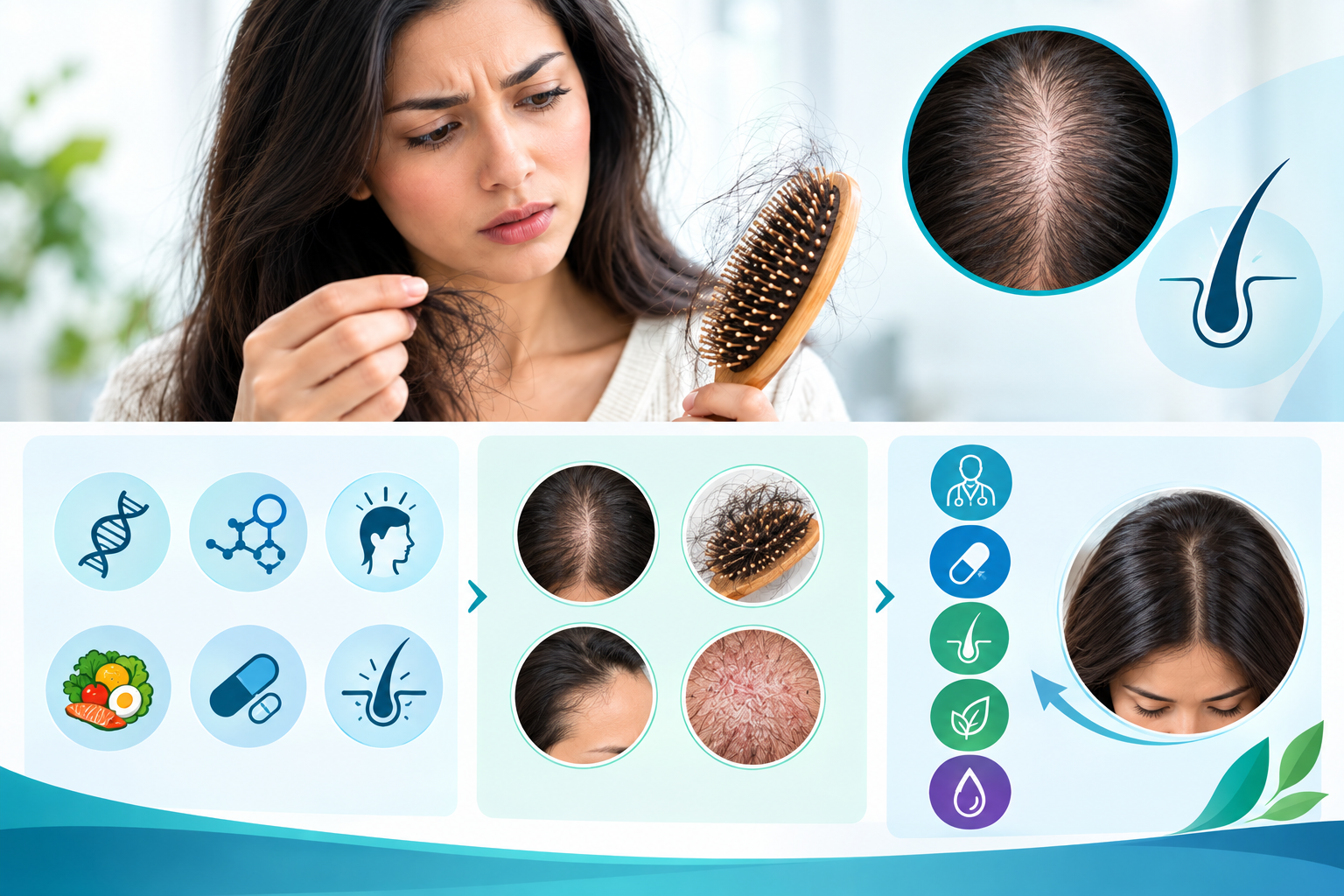
Hair loss is far more than a cosmetic concern; it’s a deeply personal issue that touches on our confidence, identity, and sense of well-being. If you’ve found yourself staring at your hairbrush with growing concern, or noticing that your ponytail feels thinner than it did a year ago, you are certainly not alone. The search for answers can be overwhelming, especially when faced with a sea of conflicting advice online.
The truth is that hair loss is a complex biological puzzle. It’s rarely the result of a single factor; rather, it’s often a combination of genetics, hormonal shifts, nutritional status, and lifestyle triggers. In this guide, we’ll decode the early signs of thinning, explore the medical causes, separate the myths of “natural regrowth” from clinical reality, and provide a roadmap to professional hair restoration — the kind our specialists build for patients in Mumbai, Pune, and Dubai.
Early Signs of Hair Loss You Should Never Ignore
Hair loss rarely happens overnight. For most people, it’s a gradual process that begins long before the scalp becomes visible. Recognizing these early “invisible” phases is the single most important step you can take to preserve your hair density.
If you notice these indicators, it’s time to shift from observation to action:
- Increased shedding. While it’s normal to lose 50 to 100 hairs a day, notice if this amount is increasing. Significant clumps on your pillow, in the shower drain, or when you brush your hair can mean your follicle cycle is shifting.
- Widening part line. Hold a mirror to your scalp. A widening part line or a visible increase in the amount of scalp seen when you part your hair is a hallmark sign of diffuse thinning.
- Temple recession or thinning. For many, the hairline at the temples is the first to retreat. Even subtle changes in your forehead frame can be an early indicator of androgenetic alopecia.
- Texture changes. Is your hair suddenly brittle, dry, or losing its usual bounce? Thinning hair often changes in diameter, becoming finer and more difficult to style.
Catching these signs early is crucial. The longer a follicle remains dormant or miniaturized, the harder it is to stimulate. Proactive care is the most effective prognosis for long-term retention.
Why Is My Hair Falling Out? Common Causes
Understanding why your hair is falling out is the prerequisite for effective treatment. We categorize these causes into several key biological drivers:
1. Genetics (Androgenetic Alopecia)
This is the most common form of hair loss, affecting both men and women. It’s a hereditary condition where hair follicles become hypersensitive to androgens (hormones), causing them to shrink — or “miniaturize” — over time. Eventually, the follicles stop producing visible hair.
2. Hormonal Shifts
Hormones are the masters of the hair growth cycle. Thyroid disorders, PCOS (Polycystic Ovary Syndrome), pregnancy, and menopause can all disrupt the balance, pushing hair follicles into a resting (telogen) phase, which leads to shedding.
3. Nutritional Deficiencies
Hair is a non-essential tissue, meaning your body will divert nutrients away from your follicles to support vital organs first. If you’re deficient in iron, Vitamin D, B12, or protein, your hair is often the first to suffer.
4. Chronic Stress (Telogen Effluvium)
Intense stress events — such as major surgery, illness, or high-pressure life changes — can shock the system. This condition, known as Telogen Effluvium, triggers a massive percentage of your hair to enter the shedding phase simultaneously.
5. Lifestyle & External Factors
Traction alopecia, caused by tight hairstyles, and damage from harsh chemical treatments or excessive heat, can physically damage the hair shaft and weaken the follicle at the root.
Can Hair Grow Back Naturally? What Really Works and What Doesn’t
When faced with hair loss, the internet is flooded with advice ranging from rosemary oil to intensive scalp massages. While these can be soothing, it’s vital to distinguish between temporary shedding and permanent follicle miniaturization.
The Reality Check
If your hair loss is caused by temporary stress or a mild nutritional deficiency, improving your health may lead to regrowth. However, if you’re experiencing hereditary thinning (androgenetic alopecia), over-the-counter oils and shampoos simply cannot penetrate the dermis to reach the follicle.
Myths vs. Facts
The myth: “Miracle” shampoos can stop genetic hair loss.
The fact: Most shampoos are rinse-off products that stay on the scalp for mere seconds. They cannot change the biological reality of how your hormones interact with your hair follicles.
The role of support: nutrition and stress management serve as excellent adjuncts to professional treatment. They create a healthy environment for your hair, but they’re rarely a standalone cure for significant thinning.
Best Hair Treatments: Which One Is Right for You?
The transition from “hoping for regrowth” to “clinical intervention” is where the most significant results occur. At this stage, professional diagnosis is the prerequisite for hair success — you need to know exactly why your hair is falling out to choose a therapy that actually works.
We prioritize professional, evidence-based modalities that go beyond the surface:
- Folli Rich PRP (Platelet-Rich Plasma). Using your body’s own growth factors to rejuvenate dormant follicles.
- Micro Mesotherapy Scalp. Targeted micro-injections of nutrients and stimulants directly into the scalp.
- Exosome therapy. Advanced, regenerative formulations designed to prolong the hair growth phase and protect follicles from damage.
- Low Level Laser Therapy. A safe, non-invasive way to stimulate dormant follicles and promote new growth.
Each individual requires a tailored approach. What works for a man experiencing temple recession may not be the optimal pathway for a woman experiencing postpartum shedding.
Explore our full Hair Treatments to learn more about the advanced, clinical pathways available to you.
Noticed more hair on your pillow than usual? Book a one-on-one consultation with our hair specialists in Mumbai, Pune, or Dubai before it progresses further.
Why Choose Tender Skin International
Hair restoration isn’t just about the technology used — it’s about who is behind the diagnosis. Tender Skin International has spent over 20 years treating skin and hair concerns for more than 200,000 patients across our clinics in Mumbai, Pune, and Dubai, with 200+ specialized services under one roof.
- Experienced doctors. Our team is led by Dr. Sonia Tekchandani, co-founder of TSI, with over 25 years of clinical and teaching experience in medical aesthetics.
- Diagnosis before treatment. Every hair concern starts with a one-on-one consultation to identify the true cause — genetic, hormonal, nutritional, or stress-related — before a plan is built.
- Clinical-grade technology. From Folli Rich PRP and Exosome therapy to Micro Mesotherapy and Low Level Laser Therapy, treatments are matched to your specific stage of hair loss.
- Hygiene and care standards. Every treatment is performed by a doctor under strict clinical hygiene protocols, not a technician.
Meet Your Hair Specialists
Dr. Sonia Tekchandani — Dermatologist, Co-Founder. Dr. Sonia Tekchandani is a renowned dermatologist and co-founder of Tender Skin International, India & UAE. With over 25 years of clinical and teaching experience, she is an award-winning celebrity dermatologist trusted by 200,000+ patients for both skin and hair concerns.
Dr. Shikha Shah — Dermatologist & Cosmetologist. Dr. Shikha Shah has been with Tender Skin International for over two and a half years, designing treatment plans built around close listening to each patient’s specific concerns.
Conclusion
Hair loss is not a permanent sentence; it’s a manageable health concern. The frustration you feel is a signal that your hair needs more than just a surface-level product — it needs a clinical strategy.
By identifying the early warning signs, understanding the root cause of your specific hair loss, and committing to evidence-based professional care, you can shift the trajectory of your hair health. Your confidence is worth the investment.
Ready to stop the shedding and start your recovery? Schedule a professional consultation at Tender Skin International today →
Frequently Asked Questions
How much hair shedding is considered “normal” per day?
It’s generally normal to lose between 50 and 100 hairs daily. If you notice a sudden, dramatic increase in shedding that persists for more than a few weeks, it’s time to investigate.
Can stress really cause permanent hair loss?
Stress usually causes “Telogen Effluvium,” a temporary shedding phase. However, if the stress is chronic and left unmanaged, or if you have a genetic predisposition to thinning, stress can certainly accelerate the process of miniaturization.
Why is my hair thinning only on top?
This is the classic pattern of Androgenetic Alopecia (pattern hair loss). The follicles on the top of the scalp are typically more sensitive to hormonal fluctuations than the hair on the back or sides of the head.
Is it ever “too late” to treat my hair loss?
While it’s always better to act early, there are often ways to improve hair quality and density even if thinning has been present for a while. As long as there is some follicle activity, clinical intervention can offer noticeable benefits.
For questions about downtime or how soon to expect results, see the FAQ on our Hair Treatments page.