
There is an emotional weight that comes with acne scars that is often overlooked. You might have successfully navigated the turbulent waters of active breakouts, only to look in the mirror and still see the persistent “ghosts” of the past. If you’re asking, “Can acne scars be removed completely?”, you are not alone in your search for clarity and confidence.
The answer, however, requires professional honesty. In dermatology, we often move away from the phrase “complete removal” and toward the concept of “significant improvement and remodeling.” While a scar is a structural change in your skin, the potential for improvement is higher today than at any point in history.
If you’re frustrated by lingering marks or textural changes, please understand this: your skin has a remarkable capacity to heal when guided by the right clinical expertise. In this guide, we’ll explore the reality of acne scars, why the cycle of acne prevents healing, and why professional intervention — like the treatment plans our dermatologists build in Mumbai, Pune, and Dubai — is the only path toward restoring your skin’s texture.
The Root Causes: What Actually Causes Acne?
To understand how to treat the aftermath of acne, we must first address how the trauma occurs in the dermis. Acne is not just a surface-level annoyance; it’s a complex biological event occurring within the pilosebaceous unit — the anatomical structure consisting of a hair follicle and its associated sebaceous (oil) gland.
The Biological “Big Four”
Dermatologists categorize the development of acne through four primary drivers:
- Sebum production. When hormones stimulate oil glands, they can shift into overdrive.
- Hyperkeratinization. This is the accumulation of dead skin cells that fail to shed properly, creating a physical “plug” or impaction in the pore.
- Bacterial proliferation. Cutibacterium acnes (the bacteria responsible for acne) naturally lives on our skin. When it becomes trapped in an oil-clogged, oxygen-deprived environment, it multiplies rapidly.
- Inflammation. The body’s immune system recognizes this bacterial overgrowth as a threat and dispatches white blood cells to the area. This immune response is exactly what creates the redness, swelling, and pus — and, crucially, the potential for structural damage.
The deeper the inflammation, the more likely it is that the dermis — the deep, structural layer of your skin — will be compromised. Once the collagen structure in the dermis is damaged, that’s when a scar is born.
The Cycle of Recurrence: Why Does Acne Keep Coming Back?
Many patients who are concerned about acne scars are still battling active breakouts. There’s a “revolving door” of acne that many people get trapped in, which is the single biggest barrier to scar treatment.
The Connection to Scarring
If you’re actively experiencing new inflammatory acne, you’re creating new trauma for your skin. Every new, deep cyst is a potential new scar. This is why we often prioritize clearing active acne before aggressive scar remodeling begins.
The Need for Maintenance
Acne is a chronic, relapsing condition. Many patients follow a “treatment-breakout-treatment” cycle, stopping their regimen as soon as their skin looks clear. This is a mistake. Acne needs long-term maintenance to keep the inflammatory processes in check — if you don’t stop the source of the trauma, you can’t effectively treat the scars. Addressing the cycle of recurrence is the prerequisite for long-term skin health.
Not All Acne Is Created Equal: Types and Treatment Alignment
A common reason for treatment failure is the “one-size-fits-all” approach. Trying to treat a deep, cystic nodule with a gentle surface exfoliant is like trying to put out a forest fire with a cup of water.
Categorizing Your Acne
- Non-inflammatory (comedones). Whiteheads and blackheads — the result of congestion, but lacking the deep inflammatory response that leads to severe scarring. Well suited to our Salicylic Peel.
- Inflammatory (papules and pustules). Red, angry bumps that signify an active immune response and potential for mild tissue damage — often treated with our Black Peel.
- Nodules and cysts. Deep-rooted, painful, and damaging — these are the “scar-makers,” and typically require a full clinical treatment plan.
The Misalignment Trap
When you use harsh scrubs on cystic acne, you destroy the skin barrier, creating more inflammation and increasing the risk of permanent texture changes. Conversely, ignoring blackheads can let them become infected. Customizing your treatment to the type of acne you have is the first step toward preventing the permanent textural damage most patients seek to avoid.
Not sure whether you’re dealing with early scarring or active acne? Book a one-on-one evaluation with our dermatology team in Mumbai, Pune, or Dubai before choosing a treatment path.
The Core Topic: Can Acne Scars Be Removed Completely?
Let’s address the elephant in the room: is “complete removal” possible?
The Distinction: PIH vs. Textural Scars
First, we must distinguish between Post-Inflammatory Hyperpigmentation (PIH) and textural scarring.
- PIH. The red or brown marks left behind after a pimple heals. These are not true scars — they’re pigment changes, and typically fade with time and professional brightening treatments like our Bio Re-Peel for Acne Marks.
- Textural scars. Atrophic (indented) or hypertrophic (raised) scars caused by a literal loss or overgrowth of collagen in the dermis.
The Science of Remodeling
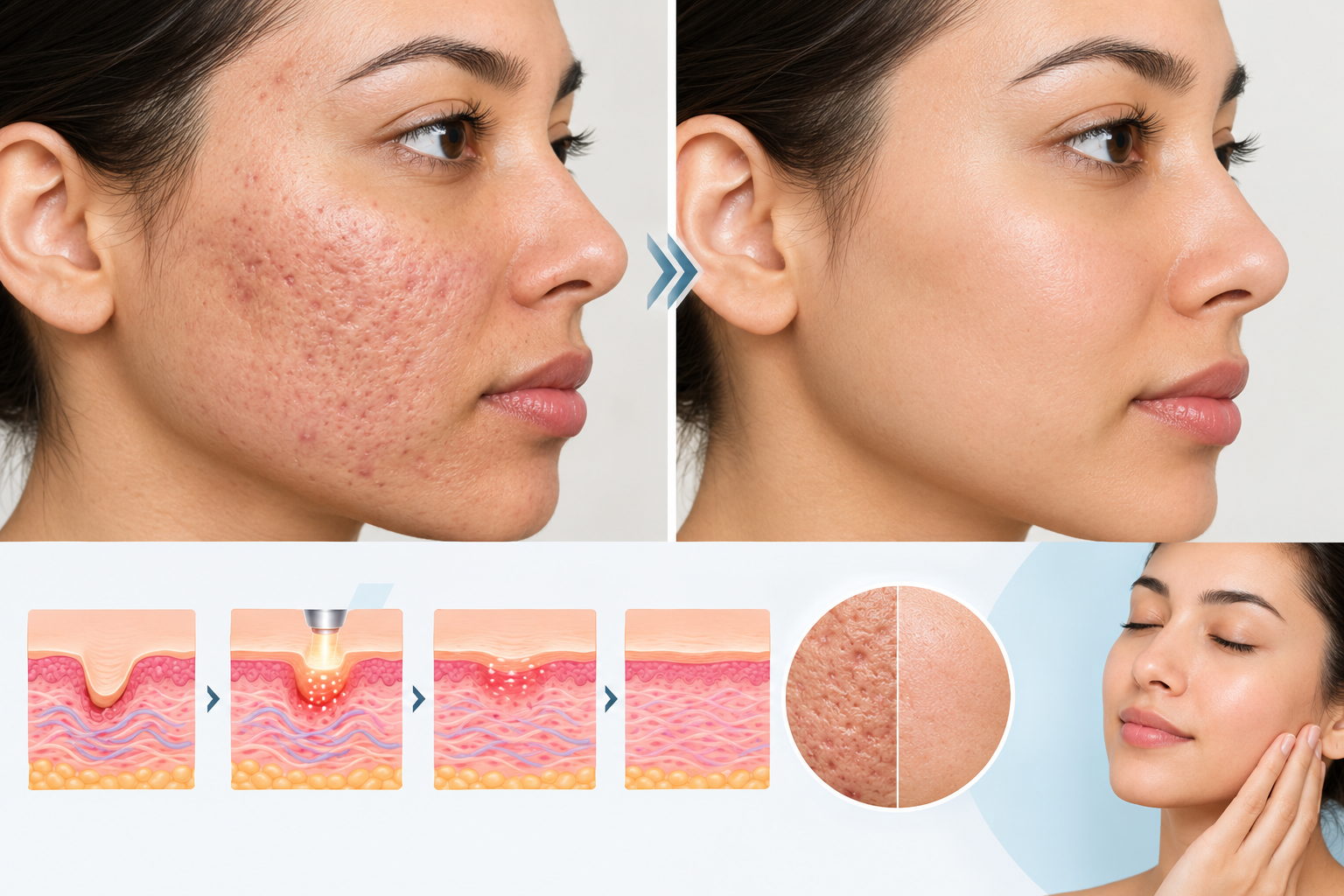
True textural scars are structural. You cannot wash them away with a topical cream — they require structural intervention. Modern dermatology focuses on collagen remodeling. By using treatments such as our CO2 Fractional Laser Scar Resurfacing, Authentic Derma Pen microneedling, and scar subcision, we intentionally create micro-injuries in the skin to force the body to produce new, healthy collagen and elastin.
While the word “complete” is rare in medicine, the goal of modern clinical intervention is restoration. We can achieve a level of smoothing and blending that makes scars virtually imperceptible to the naked eye.
The Solution: Professional Acne and Acne Scar Treatments
If you’re finished with trial-and-error home remedies, it’s time to shift to a professional framework. Acne and its aftermath are clinical conditions that require clinical, targeted interventions.
At Tender Skin International, we specialize in the “whole skin” approach. We don’t just treat the spot; we treat the cycle. Through our Acne and Acne Scar Treatments, we provide a roadmap for long-term clarity:
- Advanced diagnostics. We identify your specific acne triggers — hormonal, environmental, or related to your skin type.
- Medical-grade interventions. From high-efficacy chemical peels to advanced fractional technologies, we use clinical tools that penetrate deeper than anything you can buy at a drugstore.
- Combined therapy. We treat active acne and existing scars simultaneously, using a layered approach that ensures your skin is clear and smooth.
Why Choose Tender Skin International
Scar remodeling isn’t just about the technology used — it’s about the hands guiding it. Tender Skin International has spent over 20 years treating skin and hair concerns for more than 200,000 patients across our clinics in Mumbai, Pune, and Dubai.
- Experienced doctors. Our team is led by Dr. Sonia Tekchandani, co-founder of TSI, with over 25 years of clinical and teaching experience in medical aesthetics.
- Diagnosis before treatment. Every case starts with a one-on-one evaluation to distinguish PIH from true textural scarring before any procedure is recommended.
- Clinical-grade technology. From Bio Re-Peel to CO2 fractional laser resurfacing and scar subcision, treatments are matched to your specific scar type and depth.
- A layered, long-term plan. We treat active acne and existing scars together, and monitor progress over a series of sessions rather than promising a one-visit fix.
Meet Your Acne Specialists
Dr. Sonia Tekchandani — Dermatologist, Co-Founder. Dr. Sonia Tekchandani is a renowned dermatologist and co-founder of Tender Skin International, India & UAE. With over 25 years of clinical and teaching experience, she is an award-winning celebrity dermatologist known for her injector skills and eye for facial aesthetics, trusted by 200,000+ patients.
Dr. Shikha Shah — Dermatologist & Cosmetologist. Dr. Shikha Shah has been with Tender Skin International for over two and a half years, building treatment plans around close listening to each patient’s specific concerns.
Stop waiting for your skin to heal itself and start providing it with the professional tools it needs to repair. Book a consultation at Tender Skin International today → and let’s create your personalized recovery plan.
Conclusion
Acne scars are a persistent condition, but they are not a permanent sentence. While the promise of “100% removal” is often a marketing myth, the reality of “significant, life-changing improvement” is a medical fact.
By understanding the biology of your skin, breaking the cycle of recurring breakouts, and committing to a professional clinical strategy, you can reclaim your skin’s texture and your confidence. Your skin’s best days are ahead — the key is to start with a treatment plan that actually addresses the root of the problem.
Frequently Asked Questions
Is there a difference between a red mark and a scar?
Yes. Red or brown marks (PIH) are pigment-based and typically fade over time with proper skincare. Indented or raised scars are structural, involving changes to the collagen in your dermis, and generally require professional remodeling treatments.
How long until I see results with professional scar treatment?
Skin remodeling is a biological process. You should expect a series of sessions spaced out over 3 to 6 months. While some surface improvement may happen sooner, true collagen rebuilding takes time to manifest.
Can I treat active acne and scars at the same time?
Absolutely — in fact, it’s often the most efficient approach. We manage active inflammation to prevent new scars while simultaneously using treatments that encourage the remodeling of old ones.
Do I need multiple sessions for scar improvement?
Yes. Because scars are structural, they can’t be fixed in a single visit. A series of treatments is required to progressively stimulate the skin to replace damaged tissue with healthy, smooth collagen.
For questions about treatment safety, side effects, or how long results last, see the FAQ on our Acne and Acne Scar Treatments page.